
Creating an Environmental Legacy
How do individuals make big impact? A worked example from Clair Patterson's exposure of lead pollution.

Change is hard, especially when the change regards a danger almost no one recognizes, and involves entrenched industrial interests that don’t want to change.
I arrived in Pasadena, California in June of 1978, a recent chemistry graduate who had decided to pursue geochemistry. Caltech admitted me with only five geology classes in my background, and told me they would arrange for summer employment in a research lab if I wanted. I did.
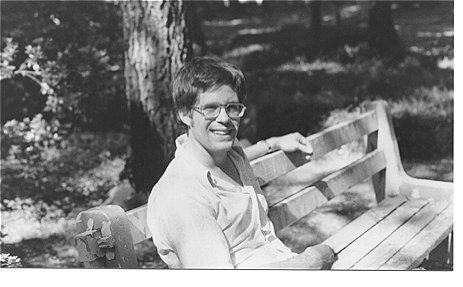
I had no idea how naïve I was. Below is my photo sans-moustache to give you a sense of me – not quite just off the farm, but unaware of the momentous problems my school was addressing.
The lab they assigned me to was Clair Patterson’s. I ultimately worked with some seriously famous people at Caltech, but none had the impact of “Pat”, as he insisted on being called. He was the first to accurately date the earth, arguably the geologist most worthy of a Nobel Prize (of course not awarded). His value of 4.6 billion years still stands today, refined but never changed[1].
But it is another finding that portends Pat’s true impact. In 1976 almost every small child in America had more lead in their blood than today’s acceptable level. Today very few have any, and the number is decreasing steadily. Lead is a neurotoxin. This is an immense public health benefit.
Quoting Kathryn Egan[2],
“Adverse neurobehavioral effects of lead exposure in young children, as measured by blood lead levels, are well-known. Studies have consistently documented negative effects of lead on cognitive function and attention-related and behavioral problems. Low-level exposure, including blood lead levels of <5 and <10 μg/dL, have been associated with decreases in academic performance in school-age children.”
Over the 40-year period starting in 1976, the level of lead in the blood of American children aged 1-5 years went from 99.8% of them exceeding today’s CDC reference level of less than 3.5 μg/dL, to 2.5% of them exceeding that level today[2]. The average concentration of lead in U.S. children’s blood ages 1–5 y declined 94.5% over those four decades, to less than 1 μg/dL.
As I sat on that bench in Pasadena in 1978, almost every American child exceeded today’s blood level ‘reference’ level of 3.5 ug/dL (no level is considered safe today[3]). Thanks to Clair Patterson, very few do today and we are on the path to zero. How did this happen? It turns out one scientist can, and Clair Patterson did, change the world. This is the story of his role.
Discovering the Problem
Pat was nowhere near as naïve as I when he arrived at the University of Chicago to start his PhD. He had finished a master’s degree during WWII, and worked for the Manhattan project under Harrison Brown. Brown would become his advisor at Chicago. Equipped with a plethora of new understandings and analytical methods like the ability to measure individual isotopes of an element to great precision, the group at Chicago created modern geochemistry.
The isotopic cornucopia they could now access would become the geologist’s method of quantifying the processes of the earth and stars – dynamic systems that changed over centuries, millennia, or even in the case of the history of the earth, billions of years. No previous laboratory instrument could quantify those changes, but a mass spectrometer could tell you what the final result of slow changes would be. This allowed Pat and his colleagues to work backwards from today’s observations to date events in the past. Lead turned out to be the key to dating the formation of the earth.
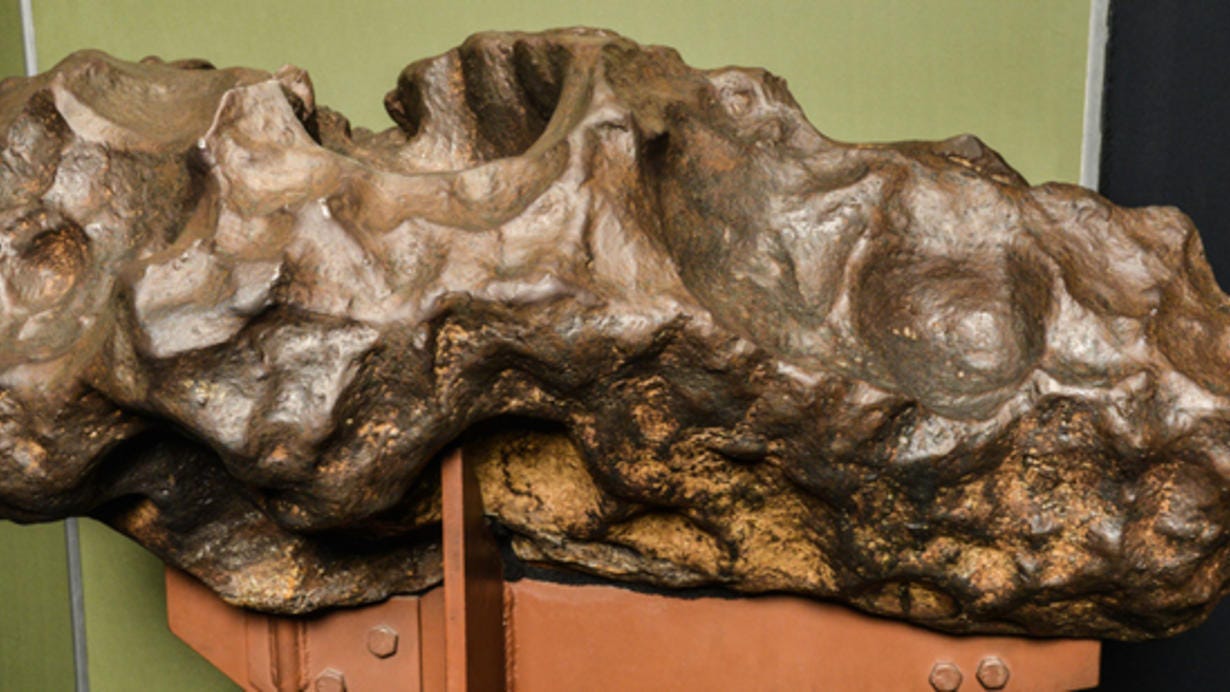
Pat recognized that meteorites were the unaltered remains of stuff that had come together to make the earth. A tiny fraction of it never coalesced into Earth, or Mars, or another planet, and continues flying around the solar system. These meteorites contain the original amounts of the elements that made up the solar nebula (the cloud of dust that became our solar system). Those elements included a little uranium, which over billions of years decays into lead – each isotope of uranium decaying at a specified speed, into only one isotope of lead.
All the lead in a meteorite comes from the decay of uranium – except for one isotope which was in the original stardust. By comparing the amounts of the isotopes, Pat could accurately measure the time that the uranium in his sample had been steadily breaking down into lead. For a meteorite that had orbited the sun with no interaction with anything but sunlight, that gave Pat the age of the meteorite. And by demonstrating that the average composition of lead in the Earth fell on the same age line as the meteorites, Pat was able to say that both the Earth and the meteorites had formed about 4.6 billion years ago[4]. Plus or minus 70 million years.
This would have been a career event for a lot of scientists, but Pat made a salient observation while doing this work. His samples, even his laboratory, were pervasively contaminated by lead. From the air. From his shoes. From dust on the windowsill. From the chemical reagents he used. Lead was everywhere, and it was 1000 times more concentrated than the samples he was trying to measure.
It took Pat a number of years to work out the clean-lab methods to avoid most of this contamination, which he finally accomplished after moving to Caltech in 1952[5]. (Twenty-six years later I would learn those same methods, in that same laboratory.)
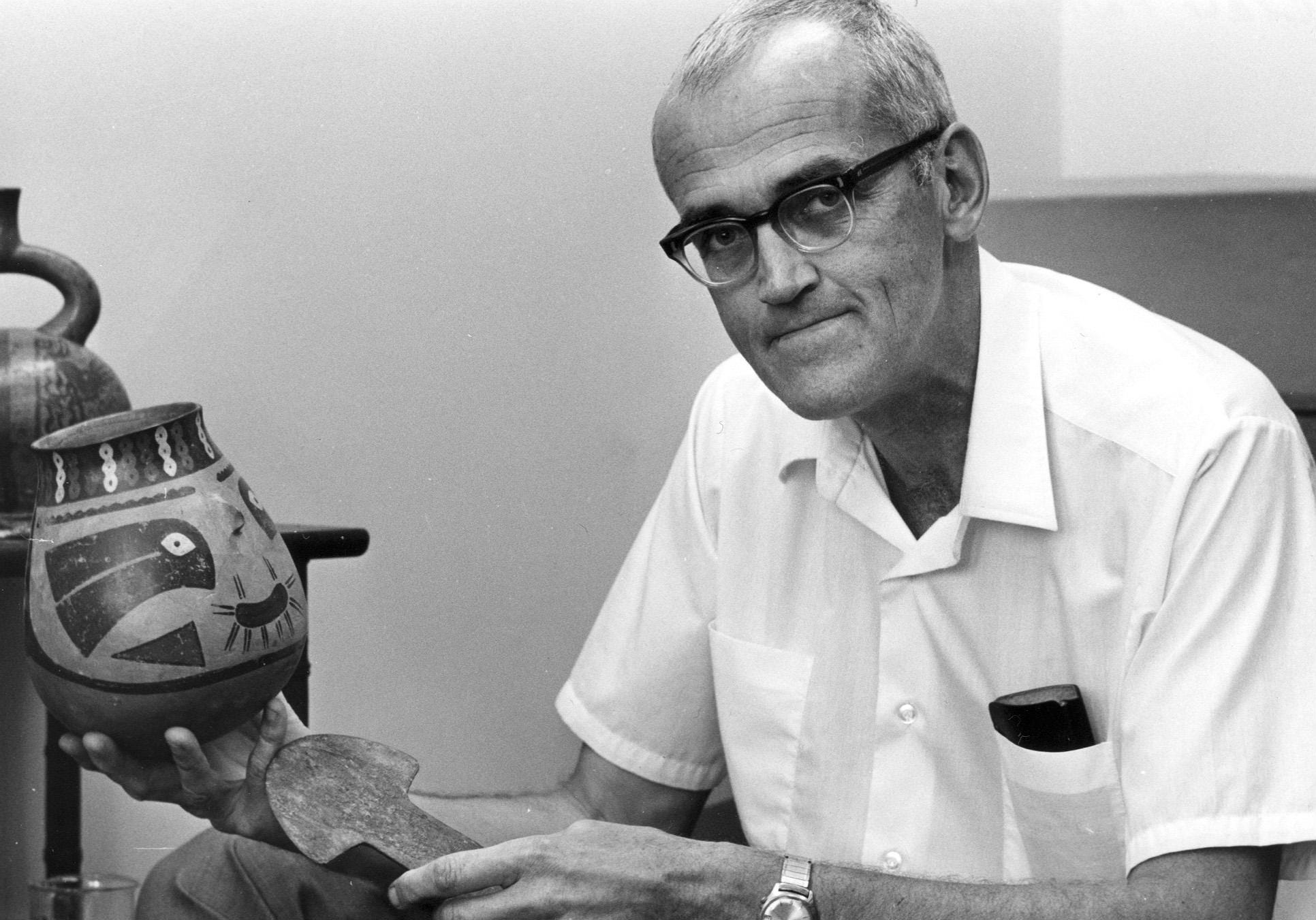
In order to date the Earth, Pat had sampled lead from all over, and he observed that high lead concentrations were a modern feature, particularly after the introduction of leaded gasoline. He could also see the signal from the beginning of silver and lead smelting – melting from the raw ore – that began in Roman times. He began a campaign to find samples from before lead contamination was prevalent, including in ice cores from Greenland, and the bones of Peruvian mummies. The 1000x contamination extended to our modern ice and rainfall, and the bones of modern humans. Bones were known to sequester lead that enters your body, replacing calcium. There it is essentially permanent. Once you become contaminated, as everyone was, you were stuck with it. I remember an energetic exchange with the always dynamic Pat, in his office, where he exclaimed, “It’s too late for me Roger, but not for you!”.
The Environmental Fight
But was it too late?
Pat was able to demonstrate that most of the lead in modern air, and water, and children who had not eaten lead-based paint, came from leaded gasoline. As it left our tailpipes it formed tiny particulates that were readily inhaled, or fell onto our food, or accumulated in our water. Now came the environmental fight. Just because we had lead contamination, was it a problem? Not according to industry.
Lead colic – severe abdominal pain, constipation, nausea, stumbling – has been known since at least 1696, when on March 10, Duke Eberhard Ludwig of the Duchy of Württemberg in today’s southern Germany, banned the adulteration of wine with a sweet additive called litharge which contained extraordinary levels of lead[6]. (Lead, especially lead acetate, is insidiously sweet). The practice was causing illness and death. Local wine merchants, impacted by a string of bad crop years in the vineyards and the depredations of the French invading repeatedly during the Nine Years War, were adding litharge to make bad wine palatable. The Duke made it a capital offense. At least one merchant was beheaded in Stuttgart. Doctors around the region understood that lead from adulterated wine and mining was a prominent cause of death. Lead was a well-known poison before the United States of America was a nation.
Remember that in 1976 the average blood lead level in five-year-olds was a little more than 15 μg/dL. At that time, ‘overt’ clinical symptoms[3] like the lead colic, damage to the brain and nervous system, slowed growth and development, lowered IQ, decreased ability to pay attention, and underperformance in school, were acknowledged to occur at about five times that blood level, so the U.S. Public Health Service set the limit at four times, or 60. I remember Pat telling me that industry wanted us to believe 15 was a natural amount, or as we called it, the background: the amount children naturally had in their blood. But from his work beginning with the meteorites and carefully measured in mummies and Greenland ice cores, Pat knew that modern levels were perhaps 1000 times higher than in a population without lead pollution.
Industry argued children were comfortably far from toxic levels (a whole factor of four), while Pat argued that modern blood levels had increased by a factor of 1000, and the remaining factor of four before they were physically and mentally debilitated was an absurd safety factor. The safe level had been exceeded long before. Today we know that is correct.
Lead was a key industrial metal, and was in every gas tank in America. Industry was not ready to give it up, or even limit it. Pat told me about the Bunker Hill lead mining and smelting company in Idaho where the children in the company town had IQs 10 points below the national average. The company explained it – “We don’t hire very smart employees and they don’t have very smart children”.
Those children had blood levels of lead averaging 67 μg/dL[7], and as high as 175 μg/dL, acknowledged as toxic even in the 1970s. Fortunately, bluster from industry did not carry the day. In 1983, EPA listed the Bunker Hill Mining and Metallurgical Complex as a Superfund site. Today at 1,500 square miles, it is one of the largest Superfund sites in the nation, taking up a large section of the Coeur d’Alene watershed. Children’s blood lead levels in the region now average a (probably) safe 2 μg/dL.
Although absurd, Bunker Hill’s response was in line with industry in general, particularly the Ethyl Corporation of America, that manufactured the tetraethyl lead in gasoline. Facing allegations of danger from lead, in 1925 they hired a young toxicologist named Robert Kehoe as their chief medical advisor. Then a pathology resident at the Cincinnati General Hospital, he moved to the University of Cincinnati in 1930 to lead a lab focusing on industrial medicine. It was funded by GM, DuPont, and the Ethyl Corporation. From this university-supported position he advocated that lead in humans was natural and low levels were not harmful[8].
In the 1970s when the EPA finally addressed lead pollution, Kehoe’s opinions had an undue weight because he had been studying the topic for fifty years (and was not afraid to point that out). Pat, from the geochemical side, and Herbert Needleman, from the children’s health side, had to fight to bring facts to the table. Pat, as a geochemist, was subjected to harsh criticism that he was not a physician or public health expert.
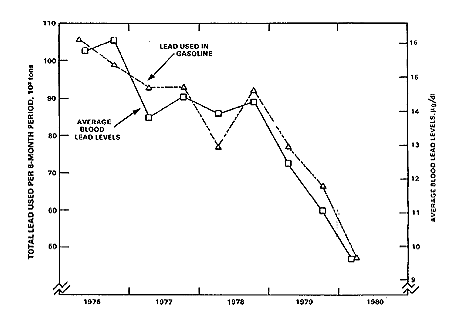
But truth did prevail – the EPA began reducing allowable lead in gasoline in 1976 under the new Clean Air Act, and completely banned it in 1996. Catalytic converters were a huge ally in the fight – they were poisoned by lead, leading the EPA to rapidly drop allowable levels to 1/10 of the 1979 allowable 1.1 grams per gallon. Ethyl Corporation argued that lead in paint was a bigger contributor to the observed blood levels in children, but the consistency with which children’s blood lead levels dropped along with lead used in gasoline tells the tale.
The War Against Lead In Gasoline
However fascinating it may be, I did not write this article to address the enormous health success of banning lead in gasoline. Instead, my focus is on how the players, particularly Pat, made their impact. I never met Herbert Needleman, the medical hero of the fight. But I did spend 1978 in Pat’s lab and got a firsthand view of how the geochemist played his role in this environmental triumph.
I was not really aware of it, but 1978 was nearly the end of the war on lead. It had begun in earnest with his 1965 article “Contaminated and Natural Lead Environments of Man”[9] where he wrote,
“0.25 ppm of lead in the blood has been regarded as more or less natural for a long time, but such a level seems actually to lie between an average natural level of about 0.0025 ppm and an acute toxic threshold of 0.5 to 0.8 ppm. This suggests that the average resident of the United States is being subjected to severe chronic lead insult.”
(0.25 ppm is about 25 ug/dl in the units I have been using.)
In the ensuing 30 years the fight would be joined, and won, and the United States and much of the world would be free of the truly tragic lead pollution found in the beginning of the industrial age. Much of the credit comes back to the single-minded work of Clair Patterson. He spent the remaining thirty years of his career working on almost nothing except proving the existence and effects of severe lead poisoning.
The battle began 40 years before Pat engaged in it, with a typical response from industry downplaying any problems. Here is a brief timeline:
Lead Becomes Part of Everyone’s Life
1921 Thomas Midgely Jr. discovers that tetraethyl lead reduces premature ignition in internal combustion engines – known as knock. Oil companies immediately realize they can sell more gasoline, because it can be lower quality.
1923 General Motors and Standard Oil of New Jersey (now ExxonMobil) create the Ethyl Corporation to produce tetraethyl lead, the active form.
1924 Workers making tetraethyl lead fall sick in droves at Ethyl Corporation plants. Men began to go crazy and die, often in straight jackets. Between 13 and 15 known deaths occurred, and over 300 men became psychotic. The company stops sales and production and announces they will solve this problem10.
1925 The U.S. Public Health Service holds a conference on the safety of tetraethyl lead. Most of the expert testimony comes from industry, including Robert Kehoe, the medical officer at the Ethyl Corporation and a corporate officer of General Motors.
Kehoe convinces the Health Service that the company has solved the industrial production hazard, and that there is no convincing evidence that lead is harmful to others or represents a public health danger[10]. This ‘lack of convincing evidence’ becomes a hallmark of industrial resistance to regulation. Production resumes.
Facts Come Out
1965 Clair Patterson publishes the first assessment of global lead pollution, estimating at least 100 times increase in humans over pre-industrial levels.
1966 Edmund Muskie convenes Senate hearings on the proposed Clean Air Act. Lead pollution is discussed by Kehoe and Patterson, with dramatically different viewpoints. Kehoe says human levels are ‘natural’, Patterson shows data that they are at least 100 times that. Muskie is clearly sympathetic to Patterson – lead is included as one of the contaminants to be controlled by the Act.
Regulation Begins
1970 The Clean Air Act goes into force with lead as a controlled item – industry begins restricting use. The EPA, under pressure to regulate lead in gasoline, funded a study of airborne lead and its health effects by the National Research Council[11]. Kehoe was named a consultant. Patterson was excluded.
1973 EPA begins formally restricting use of lead in gasoline.
1975 Maximum of 1.7 grams per gallon (gpg) all grades
1982 Leaded gasoline restricted to 1.1 gpg
1985 Interim standard of 0.50 gpg
1986 Final standard of 0.10 gpg
The Science is Established
1979 Patterson publishes data showing lead concentrations in 1600 year-old Peruvian mummies – and finds that they contain 700 to 1000 times less lead than modern people[12].
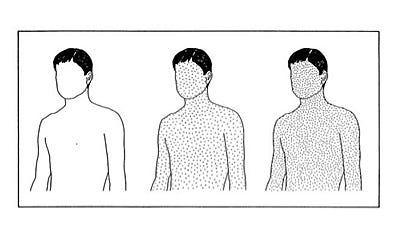
1980 The NationalAcademy of Sciences /National Research Council convenes a second study with Patterson as a member. The report is strongly supportive of reducing lead in the environment. Pat is not satisfied and writes an 80-page dissenting opinion that is included in the report, along with his famous ‘measles’ plot[13] that made clear how close Americans were to lead poisoning.
The War is Won
January 29, 1996 EPA Administrator Carol M. Browner announces a ban on all leaded gasoline for on-road vehicles. Clair Patterson died two months before.
One Scientist’s Impact
Throughout this period Pat kept up an intense research and publication program, adding more than 50 papers on lead and lead pollution to the peer-reviewed scientific literature. With the exception of the Muskie committee and the National Academy report, that was his only communication method.
He told me, “Roger, it is not my job to fight this out in the newspapers. I’m a scientist and this is a scientific issue.” He said it with his usual vehemence, openly hostile to the idea of going public on the lead issue. He especially avoided talking to reporters, a role most leading environmental scientists would readily embrace today. I took it as fact in 1978 that he had always pursued that path. However, as I review the history of the fights with Kehoe, the senate testimony, and the apparently difficult National Academy report, I realize that he probably did not enjoy, or even value those fights. He was glad to let others lead the charge while he did the needed science.
As a new graduate student, I did not appreciate how important this work was, or how unusual was Pat’s dedication to the truth and nothing but the truth. I wish I had spent more time not only understanding the science, but how impact happens.
Pat stands out for building the case, and also clarifying the solution. It was remarkably simple – ban lead in gasoline, in paint, in every consumer product. Lead was not necessary – it was just cheaper than the alternative. The plot below of total lead emissions from transportation vs. the timing of regulations is fascinating. Lead emissions consistently dropped ahead of the regulation. Fuel companies were reducing lead and replacing it with often better alternatives like a little bit of ethanol, well in advance of being required to. Because it was easy to do.
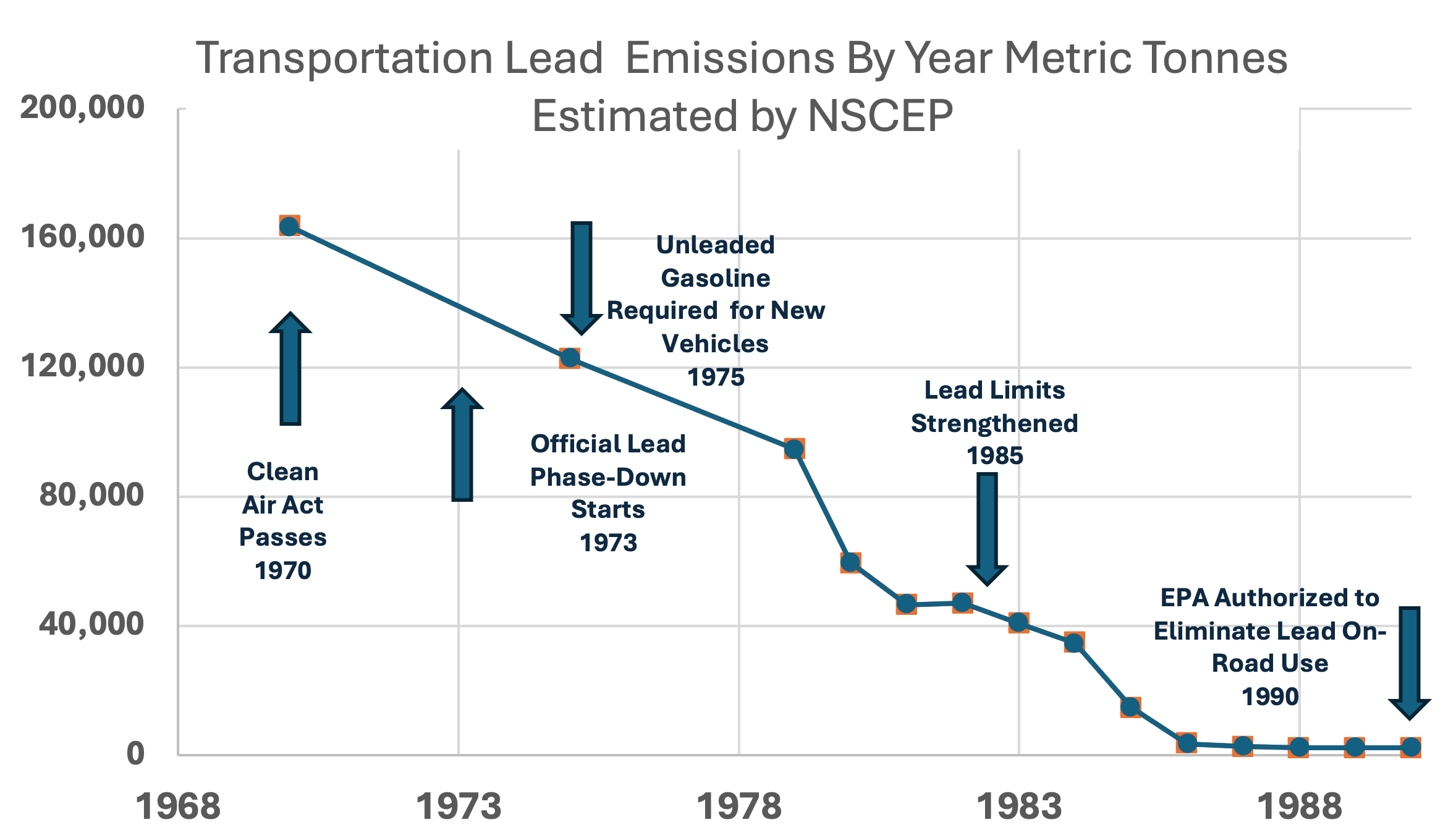
This could either be considered fortunate, or ridiculous that industry had not made these changes on their own. Fortunately, Pat was there to prove that the contamination was real, and Howard Needleman (psychologist at the University of Pittsburg) was there to show the impacts.
Other environmental problems are more complex and face difficult fights with industry. Rachel Carson’s exposure of the dangers of pesticides comes to mind. We are still fighting that battle. I don’t need to mention climate. It is rare for individuals like Pat to have such a clear impact on a major problem. His capacity to never relent from generating compelling and accurate information to drive decisions is a heroic trait. His legacy provides a beacon for all of us who hope for a better world.
As always, thanks to Amy Aines for her excellent suggestions and review of this article. All the stupid stuff, of course, is mine.
[1] For an outstanding review, see Russ Flegal’s retrospective on Pat’s geochemical legacy. Flegal, A. F. Environmental Research, Section A 78, 65—70 (1998) Article No. Er983861, and for a full review of his career, George R. Tilton’s biographical memoir Clair Cameron Patterson | Biographical Memoirs/ Volume 74 | The National Academies Press.
[2] Kathryn B. Egan, Cheryl R. Cornwell, Joseph G. Courtney, and Adrienne S. Ettinger (2021) Blood Lead Levels in U.S. Children Ages 1–11 Years, 1976–2016. Environmental Health Perspectives Volume 129, Issue 3 CID: 037003 https://doi.org/10.1289/EHP7932
[3] https://www.cdc.gov/lead-prevention/about/index.html?CDC_AAref_Val=https://www.cdc.gov/nceh/lead/docs/final_compiled_ll_lead_exposure_chapter_for_cleared_draft_508.pdf
[4] Patterson, C. (1956). "Age of meteorites and the Earth." Geochimica et Cosmochimica Acta, 10(4), 230–237. doi:10.1016/0016-7037(56)90036-9
[5] https://www.gps.caltech.edu/people/clair-c-patterson
[6] Josef Eisinger (1982) Lead and wine: Eberhard Gockel and the Colica Pictonum. Medical History, 1982, 26:279-302. https://doi.org/10.1017/S0025727300041508 Published online by Cambridge University Press
[7] https://www.epa.gov/newsreleases/epa-deq-panhandle-health-celebrate-50-years-protecting-children-lead-poisoning-0?utm
[8] Gerald Markowitz; David Rosner (2013-04-30). The Lead Wars: The Politics of Science and the Fate of America's Children. University of California Press, 2013. p. 39. ISBN 978-0-520-27325-2.
[9] Patterson, Clair C. 1965. “Contaminated and Natural Lead Environments of Man”. Archives of Environmental Health: An International Journal 11 (3): 344-60. https://doi.org/10.1080/00039896.1965.10664229. Caltech has preserved the typewritten manuscript, available at https://authors.library.caltech.edu/records/btnnq-qzk72.
[10] Herbert L. Needleman, Environmental Research, Section A 78, 79—85 (1998) Article No. Er973807, and Jerome O. Nriagu, Environmental Research, Section A 78, 71—78 (1998) Article No. Er973808
[11] National Academy of Sciences/National Research Council (1972). ‘‘LEAD: Airborne Lead in Perspective.’’ National Academy Press, Washington DC.
[12] J E Ericson, H Shirahata, C C Patterson Skeletal concentrations of lead in ancient Peruvians, N Engl J Med 1979 Apr 26;300(17):946-51. doi: 10.1056/NEJM197904263001703
[13] National Academy of Sciences/National Research Council (1980). ‘‘Lead in the Human Environment.’’ National Academy Press, Washington DC.